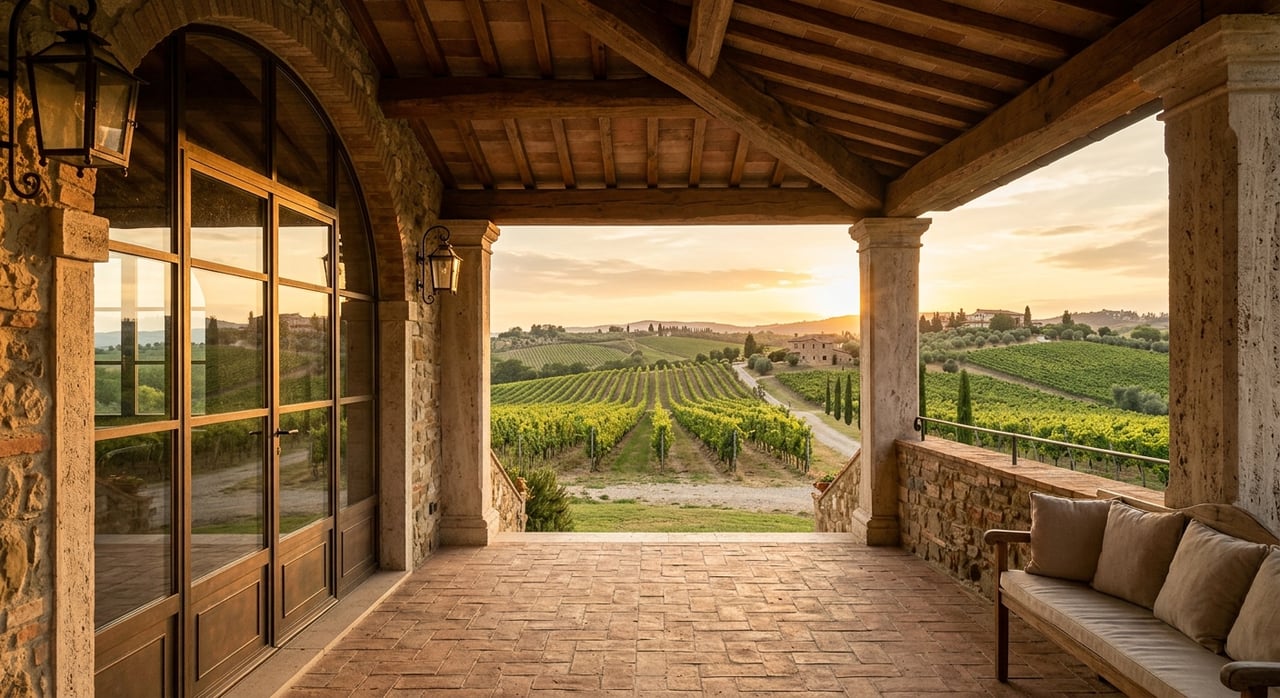
If you own or are preparing to market a vineyard in Oakville or Rutherford, you are not selling ordinary acreage. You are presenting a scarce Napa Valley asset in two of the region’s most recognized sub-AVAs, where provenance, production history, and regulatory readiness can matter as much as location. For institutional buyers, that means the story has to go beyond beauty and into underwriting. Let’s dive in.
Why Oakville and Rutherford stand apart
Oakville and Rutherford hold a unique place in Napa Valley because both are premium sub-AVAs officially recognized in 1993. Oakville sits on the valley floor and benefits from warm afternoons moderated by fog and breezes, while its soils vary from gravelly alluvial loams on the west side to heavier volcanic soils on the east. Rutherford is slightly warmer, located at the widest part of the valley, and is known for deep gravelly sandy alluvial benchland soils and a Cabernet profile often associated with Rutherford dust tannins.
That distinction matters when you are positioning a property for institutional capital. Buyers in this segment are often looking for more than a vineyard with current income. They are looking for a place within a recognized appellation system, with a production identity that supports long-term brand value.
Oakville also brings meaningful scale within a tightly held market. The area has more than 5,000 planted acres and more than 50 wineries sourcing grapes there. In practical terms, that supports a market narrative built around established demand, deep industry awareness, and strong peer recognition.
Napa scarcity supports premium pricing
Institutional buyers tend to focus on category leadership and supply scarcity. Napa Valley provides both. According to Napa Valley Vintners, the region was the first agricultural preserve in the United States, nearly all wineries are family owned, and Napa accounts for only 4% of California wine grape harvest.
That combination creates a useful frame for sellers. When supply is limited and agricultural protections are strong, premium vineyard assets can be positioned as long-term strategic holdings rather than interchangeable farmland. In Oakville and Rutherford, that positioning becomes even stronger because the appellation names themselves carry market weight.
What current market signals say
The broader wine market is not rewarding average assets equally, and that is exactly why premium positioning matters. Napa County’s 2024 crop report shows wine grapes generated $1.031 billion in value, with 147,182 tons harvested from 45,967 bearing acres. Cabernet Sauvignon alone accounted for 78,536 tons from 24,839 bearing acres at an average of $9,146 per ton, while Cabernet Franc led the county at $11,332 per ton.
Those numbers help support a focused message for Oakville and Rutherford properties, especially where Cabernet is part of the vineyard mix. Cabernet Sauvignon, Chardonnay, and Merlot together represented about 82% of total winegrape value in Napa County, reinforcing how concentrated value is in key varieties and premium production.
It is also important to read pricing data carefully. Napa County’s crop report and the USDA Grape Crush Report use different scopes and methods, so they are not directly comparable. The smarter takeaway is not to chase a single universal number, but to understand that premium Napa Cabernet remains a highly differentiated, high-value category.
Why institutional buyers still show up
Even in a market correction, top-tier assets continue to draw serious capital. The 2025 Silicon Valley Bank wine report described the industry as being in its first demand-based correction in three decades, with total wine supply backed up and the average winery posting a 3.4% revenue decline. At the same time, the top quartile still averaged 22% revenue growth.
That split is important if you are bringing an Oakville or Rutherford vineyard to market. Institutional buyers are not looking for average exposure. They are looking for assets that can outperform because of appellation quality, operating reliability, and a credible long-term story.
Recent transactions support that point. Butterfly Equity agreed to buy Duckhorn for $1.95 billion in 2024, and St. Supéry, owned by Chanel, acquired Rudd Estate in Oakville in April 2026, describing it as a generational, estate-grown asset. Those examples show that large strategic buyers are still active where the property checks the right boxes.
What buyers underwrite first
When institutional groups evaluate a vineyard, they are typically underwriting risk before they underwrite upside. That means the presentation of the asset needs to be disciplined, factual, and complete. A beautiful brochure may open the door, but a buyer-ready diligence package is what keeps momentum moving.
At minimum, the core file should include:
- Assessor’s Parcel Numbers
- Exact legal description
- Current preliminary title report
- Recorded access documents
- Clear site map
- Complete chain of title
If parcel legality is unclear, Napa County notes that a Certificate of Compliance may be needed. County survey staff handle Certificates of Compliance, lot line adjustments, parcel mergers, and survey records. For a seller, resolving that issue before launch can reduce uncertainty and improve buyer confidence.
Vineyard operating records matter
For institutional and winery-group buyers, the vineyard itself has to read like an operating business, not just a land holding. These buyers often want to see block-level yield history, planting dates, clone and rootstock maps, irrigation and well-meter records, replant history, and any grape-sale or farming contracts.
That level of detail helps a buyer assess supply continuity and operational reliability. In premium Napa, the future value of an asset is often tied to how clearly a buyer can model vineyard performance and understand how the property fits into a broader production or portfolio strategy.
Water and groundwater can shape value
Water is central to diligence in Napa County, and it should be addressed early. County guidance notes that some projects in the Milliken-Sarco-Tulocay groundwater deficient area require groundwater permits. In that area, agricultural redevelopment is generally capped at an average of 0.3 acre-feet per acre per year, with metering and reporting requirements.
The county also states that the Napa Valley Subbasin is now subject to groundwater sustainability management, and as of December 2025, groundwater sustainability fees apply to properties in the subbasin outside several municipal service districts. For a seller, this means water records, metering history, and permit status should be organized before the property is offered to the market.
A buyer who sees clarity on water issues is more likely to view the vineyard as a low-friction acquisition. A buyer who sees gaps may slow the process or discount value to account for uncertainty.
Permitting and replant potential affect pricing
In Oakville and Rutherford, value is not only about what is planted today. It is also about what can be improved, replanted, or modernized within Napa County’s conservation framework. That is why permitting history and redevelopment constraints often become major pricing factors.
On slopes greater than 5%, new vineyard work commonly triggers an ECPA process and CEQA review. Replanting an existing vineyard without changing the footprint can be exempt if an erosion-control or replanting program is approved. For buyers, this distinction matters because it can separate a manageable operational update from a longer and more public entitlement process.
If you are positioning a property for institutional interest, it helps to answer one core question clearly: can this asset be improved without unusual permitting friction? The more precise the answer, the stronger the marketing case becomes.
Expansion is usually operational, not speculative
One common mistake in vineyard marketing is overstating expansion potential. In Napa County, that can quickly undermine credibility with sophisticated buyers. The county’s General Plan protects agriculture through 40- and 160-acre minimum parcel sizes, and Williamson Act contracts require AP or AW zoning, with acreage thresholds tied to land type and limited exceptions.
In practice, many valley-floor vineyard assets do not offer easy subdivision upside. The more realistic path to value is often operational optimization, replant strategy, production continuity, or adjacent consolidation. Institutional buyers usually respect that framing because it aligns with the actual rules governing the land.
The story buyers pay for
The most effective story for Oakville and Rutherford is usually stewardship plus provenance. Oakville’s official appellation profile emphasizes the historic To Kalon vineyard along with the area’s mix of fog, warmth, and varied soils. Rutherford’s profile highlights historic vineyards, large holdings, and the Cabernet identity shaped by its central location and benchland soils.
That kind of narrative works best when it is supported by hard facts. Buyers may respond emotionally to the legacy of a place, but they commit capital when the story is matched by title clarity, water records, parcel status, and operating documentation. In other words, prestige opens the conversation, and diligence closes it.
How to position a vineyard for institutional buyers
If your goal is to attract serious capital, preparation matters as much as exposure. Before marketing begins, it is often worth cleaning up the issues that buyers are most likely to flag.
A strong pre-market plan may include:
- Confirming parcel status and legal descriptions
- Reviewing title and recorded access
- Organizing water, well, and metering records
- Compiling block maps, planting data, and yield history
- Identifying existing contracts and operational agreements
- Reviewing erosion-control, replanting, and entitlement history
- Clarifying whether redevelopment paths are straightforward or constrained
This kind of preparation can help transform the asset from a scenic vineyard into a scalable Cabernet platform with a more credible institutional profile. That shift in presentation often matters in premium markets like Oakville and Rutherford, where buyers are selective and underwriting is rigorous.
If you are considering a sale, acquisition, or pre-market positioning strategy for vineyard land in Napa Valley, Jeff & Casey Bounsall bring a land-first approach shaped by technical parcel research, vineyard expertise, and high-touch marketing tailored to serious wine country buyers.
FAQs
What makes Oakville and Rutherford important for Napa vineyard buyers?
- Oakville and Rutherford are premium Napa Valley sub-AVAs known for recognized Cabernet production, distinct soil profiles, and strong provenance, which can make them especially attractive to strategic and institutional buyers.
What documents do institutional buyers want for a Napa vineyard?
- Institutional buyers often want APNs, the legal description, a preliminary title report, access documents, site maps, chain of title, and detailed vineyard operating records such as yield history, planting dates, and irrigation data.
Why do water records matter for Oakville and Rutherford vineyard sales?
- Water records matter because Napa County groundwater rules, metering requirements, and possible sustainability fees can affect redevelopment, operating costs, and buyer risk analysis.
Can a Napa vineyard easily be expanded or subdivided?
- In many cases, no, because Napa County’s agricultural protections, parcel size rules, and Williamson Act standards often limit easy subdivision, which makes operational improvement a more realistic value driver.
How should a seller position an Oakville or Rutherford vineyard for institutional capital?
- A seller should combine a strong appellation story with a complete diligence package that addresses title, parcel legality, water, permitting history, and vineyard performance so the asset reads as credible, scalable, and low-friction.