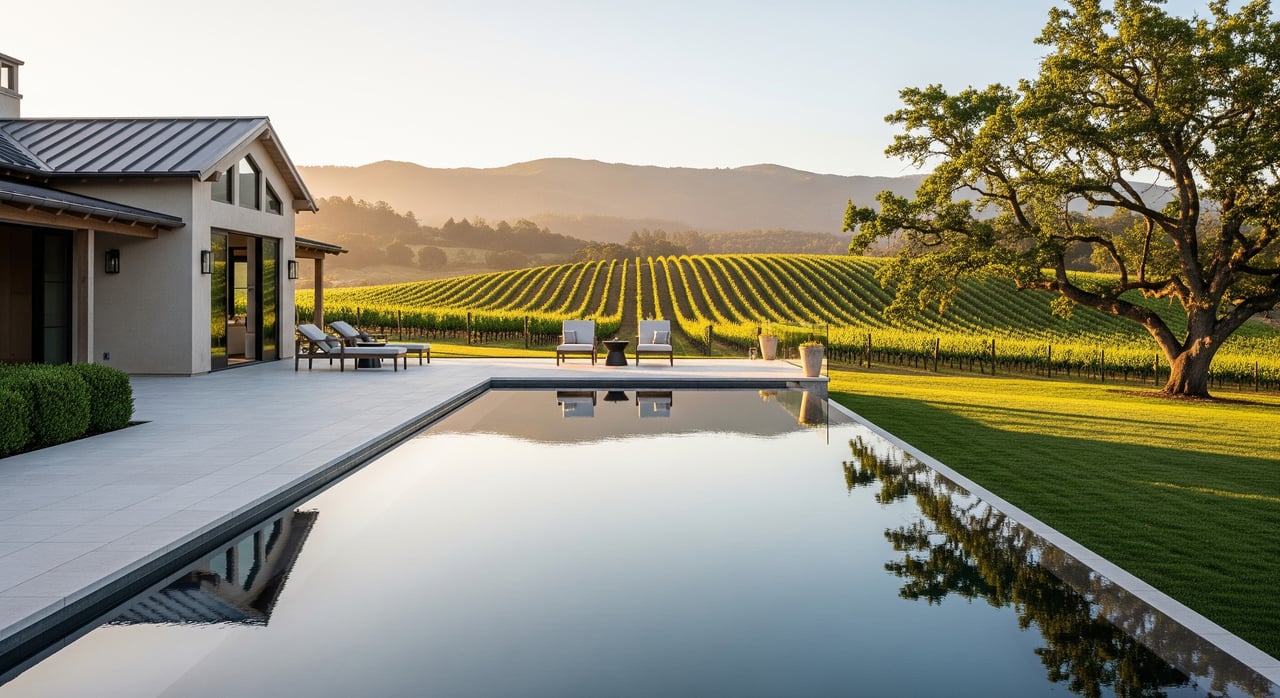
Ever wonder what life feels like when your backyard is rows of vines, oak‑studded hills, and sunsets that seem to linger just for you? If you’re eyeing a luxury estate near Healdsburg, you’re likely balancing the dream with smart questions about operations, risk, and value. You want privacy and beauty, but you also want clarity on water, fire, permits, and the real day‑to‑day. This guide gives you a grounded picture of ownership in and around Healdsburg, from lifestyle to logistics, so you can plan with confidence. Let’s dive in.
The estates you find near Healdsburg
You’ll see a few distinct estate profiles in and around Healdsburg, Dry Creek Valley, the Russian River corridor, and nearby hills.
- Vineyard estates. Planted acreage or vineyard‑ready land, often with varietals like Zinfandel, Cabernet, Chardonnay, Pinot Noir, or Sauvignon Blanc depending on microclimate and soils.
- Hilltop and ridge retreats. Panoramic views, privacy, and breezes, with added attention to access roads, grading, erosion control, and fire‑safe design.
- River‑adjacent properties. Russian River frontage or nearby access for kayaking and swimming, with possible flood designations and riparian setback rules.
- Multi‑use country estates. Guesthouses or ADUs, barns or stables, event or hospitality spaces, and flexible acreage for hobbies or small‑scale agriculture.
Amenities often include pools and spas, outdoor kitchens, guest quarters, staff space, private gates and roads, and for vineyard properties, infrastructure like irrigation systems and farm buildings. Closer to town you may find municipal utilities, though many rural estates rely on private wells and septic systems.
Daily life around Healdsburg Plaza
Healdsburg Plaza is a lively hub with tasting rooms, boutiques, galleries, and a strong restaurant scene. Community events and a popular farmers market set an easy rhythm to the week. Owners enjoy a social calendar shaped by winery events, harvest season, wine auctions, and charity galas. The overall feel is refined yet relaxed, with top‑tier food and wine always nearby.
Outdoor life and wellness
If you love the outdoors, this is your spot. River‑adjacent owners enjoy seasonal kayaking, swimming, and tubing. Hiking, mountain biking, and horseback riding are easy to access in regional parks and on private acreage. Many estates are designed for indoor‑outdoor living, with private gyms, yoga studios, pools, and wellness amenities to match the setting.
Getting around and travel
Healdsburg draws both full‑time residents and second‑home owners. Many commute as needed to Bay Area tech and business centers, with typical drive times ranging from about 1.5 to 2 hours depending on destination and traffic. The nearest commercial hub is the Charles M. Schulz–Sonoma County Airport in Santa Rosa for regional flights. High‑net‑worth owners often consider private or charter options and invest in privacy‑minded access features on their properties.
What ownership really costs
Luxury estates in the Healdsburg area generally trade in the multi‑million dollar range. Property taxes reflect California’s Prop 13 rules at purchase, plus supplemental and any local assessments. Beyond that, plan for recurring costs: property insurance, utilities and well pumping, septic maintenance, landscaping and groundskeeping, private road or bridge upkeep, housekeeping, and staffing for caretaking or guest services.
Insurance is a key line item. Wildfire exposure has increased premiums and underwriting scrutiny in parts of Sonoma County. Owners often invest in home hardening and defensible space to qualify for or improve coverage. If the property is near the Russian River or a tributary and lies in a mapped flood zone, flood insurance may be required.
Vineyard ownership basics
If your estate includes vines, plan for professional management or a clear operations plan. Key considerations include irrigation design, rootstock and clone choices, trellis systems, pruning, canopy work, pest and disease control, fruit thinning, and harvest labor. Costs vary by acreage, vine age, and farming intensity.
You can make wine on site or work with a custom crush partner. Commercial production and tasting activities trigger permitting, wastewater handling rules, ABC licensing, and traffic and parking conditions. Many estate owners choose custom crush to reduce capital needs and simplify permitting, while still enjoying the lifestyle of owning a vineyard.
Water, utilities, and septic
Most country estates rely on private wells and on‑site septic systems. You should test well water availability and quality before purchase and confirm septic system capacity and permits. Irrigation water may come from wells, surface water rights, or storage ponds. Drought policies and local restrictions can affect allocations and timing, so factor those into your long‑term plan.
Risk, regulation, and resilience
Sonoma County’s Permit & Resource Management Department (PRMD) governs zoning, land use, building, and permits for wells, septic systems, and agricultural or winery operations. Requirements vary by parcel and zoning, and special districts such as floodplains or riparian corridors can add conditions.
Wildfire risk is a real planning factor in rural and hillside locations. CAL FIRE designates Fire Hazard Severity Zones that influence building standards, insurance, and mitigation planning. Owners typically adopt a layered approach: defensible space, ember‑resistant materials, residential sprinklers, on‑site water storage, and thoughtful landscape management.
If you are near the Russian River, check flood risk and riparian rules. FEMA flood maps and county guidance help identify zones and any project limits within riparian corridors, which also protect sensitive habitats in some tributaries.
Here are common resilience upgrades to consider:
- Class A roofs, ember‑resistant vents, and non‑combustible siding or hardscape near structures.
- 100 feet or more of well‑maintained defensible space, adjusted to site conditions.
- On‑site water storage tanks or ponds and accessible fire department connections.
- Backup power, gate controls that work in outages, and clear evacuation routes.
Market profile and resale
Demand for luxury estates around Healdsburg often outpaces supply. The buyer pool includes Bay Area professionals and entrepreneurs, wine industry players, families seeking privacy, and international buyers. Market pricing can move with Bay Area wealth flows, interest rates, and tourism trends.
Liquidity for unique properties can vary. Turnkey estates in desirable microclimates with clean permitting and well‑documented operations tend to have stronger resale prospects. Properties that require specialized buyers, like winery‑equipped estates, can take longer depending on timing and market depth.
Smart due diligence checklist
Use this pre‑purchase list to avoid surprises and protect value:
- Confirm zoning, allowed uses, and any special districts with county PRMD.
- Review existing permits, use permits, and any conditions tied to winery or hospitality uses.
- Order early insurance quotes for wildfire and flood, and scope required mitigation.
- Inspect wells for yield and water quality, and confirm irrigation sources and rights.
- Inspect septic systems for capacity, condition, and compliance.
- Map fire hazard zones and evacuation access using CAL FIRE resources.
- Check FEMA flood maps for river‑adjacent parcels and confirm riparian setbacks.
- For vineyards, review farming records, varietals, trellis design, irrigation layout, and contracts.
- Evaluate private road and bridge maintenance obligations and agreements.
- Model operating costs, staffing needs, and reserves for capital projects.
Is a tasting room right for you?
Hosting tastings can be appealing, but it comes with responsibility. You will need the right county use permits, ABC licensing, wastewater solutions, and plans for visitor parking and traffic management. Many owners prefer a private lifestyle or limited hospitality, while others pursue measured, by‑appointment experiences that align with permit conditions.
Privacy, security, and access
Many estates offer privacy through gated entrances, long drives, and generous setbacks. Security planning should match the setting and include clear addressing, lockable gates that allow emergency access, and good lighting near entries. In rural or hillside areas, consider evacuation planning, defensible space, and year‑round road maintenance. Private road agreements are common and should be reviewed.
The bottom line
Owning a luxury estate near Healdsburg blends wine country romance with real‑world operations. The day‑to‑day is rewarding if you plan for water, utilities, insurance, staffing, and the right permits. With careful due diligence and a smart resilience plan, you can enjoy privacy, views, and a vibrant town life minutes away.
If you are ready to explore an estate or vineyard opportunity, partner with local experts who understand land, terroir, and permitting. Connect with Jeff & Casey Bounsall to navigate site selection, parcel research, vineyard planning, and a tailored acquisition or sale strategy.
FAQs
What types of luxury estates are common near Healdsburg?
- Vineyard estates, hilltop or ridge retreats, river‑adjacent properties, and multi‑use country estates with amenities like guesthouses, barns, and pools.
How do wildfire risks impact ownership near Healdsburg?
- Risks affect insurance, building standards, and preparedness; owners often add defensible space, ember‑resistant construction, and on‑site water storage to improve resilience.
What are typical operating costs for a Healdsburg estate?
- Beyond property taxes, plan for insurance, utilities and well pumping, septic upkeep, landscaping, private road or bridge maintenance, housekeeping, and staffing.
What should I know about wells and septic on rural estates?
- Most rely on private wells and on‑site septic; test well yield and water quality, confirm septic permits and capacity, and plan for ongoing inspections and maintenance.
Can I produce wine or open a tasting room on my property?
- Possibly, but you will need county use permits, ABC licensing, wastewater solutions, and plans for parking and traffic; many owners use custom crush to simplify operations.
How close is Healdsburg to airports and Bay Area hubs?
- Driving to Bay Area centers usually takes about 1.5 to 2 hours depending on traffic, and the Charles M. Schulz–Sonoma County Airport in Santa Rosa offers nearby regional flights.