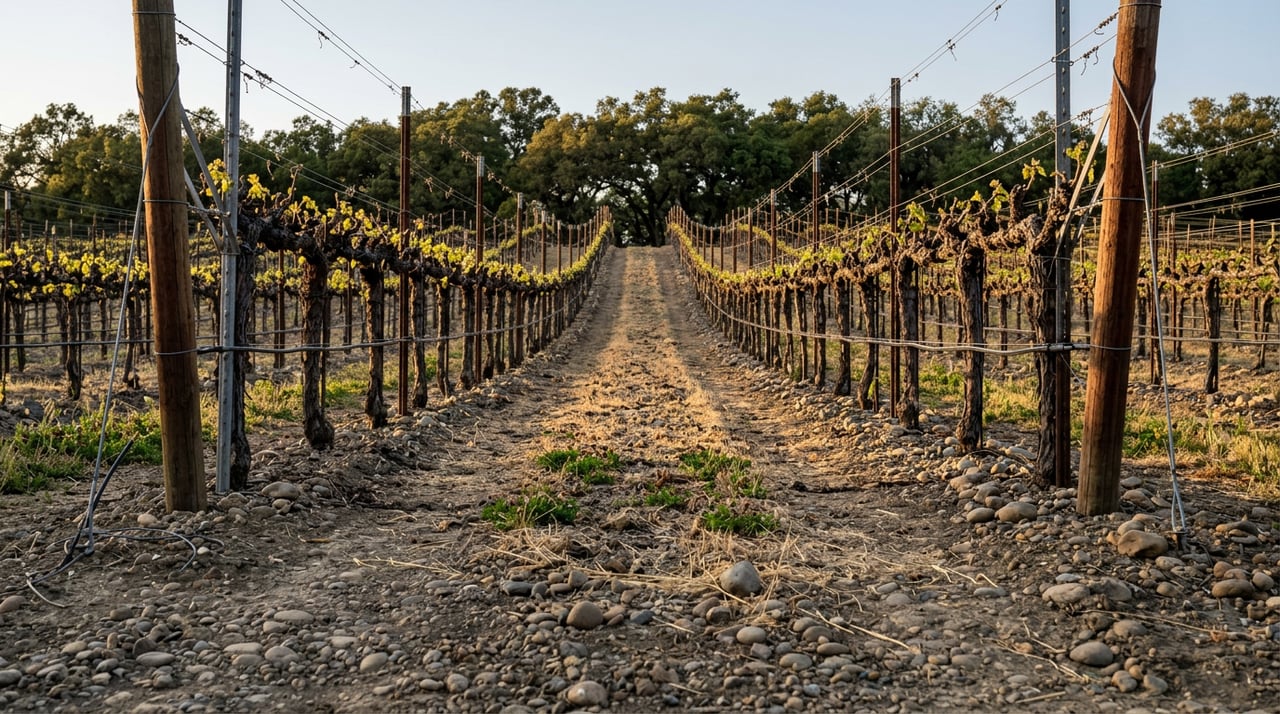
Looking for a Cabernet vineyard in Oakville or Rutherford that can anchor a flagship program? You know the address on the label matters, but the dirt, water, and permits decide performance and timeline. In this guide, you’ll get a practical, data-driven checklist to screen parcels, understand AVA nuances, and spot red flags before you write an offer. Let’s dive in.
Oakville vs Rutherford essentials
AVA boundaries and labels
If you want Oakville or Rutherford on your label, confirm the parcel sits inside the legal AVA boundary. The federal AVA decisions are the authority and reference specific USGS maps and landmarks. Use the official filings for Oakville and Rutherford to verify an APN before you rely on marketing maps or hearsay. Start with the Oakville final rule and the Rutherford final rule from the Alcohol and Tobacco Tax and Trade Bureau.
- See the legal descriptions and map references for Oakville’s AVA boundary.
- See the legal descriptions and map references for Rutherford’s AVA boundary.
Climate and growing degree days
Both AVAs excel for Cabernet, yet they are not identical in heat accumulation. In the historical datasets submitted to TTB, Rutherford shows roughly 3,159 to 3,389 degree-day units, while Oakville shows about 3,039 to 3,124. These ranges help explain vintage timing and subtle style differences. Confirm current growing degree days with a nearby weather station during due diligence using the Oakville AVA filing’s climate discussion as your baseline context.
Soils and parent materials
Oakville and Rutherford both include benches and fans, but their parent materials vary. Oakville’s alluvial fans include frequent clasts from the Sonoma Volcanics, which can affect drainage and texture. Rutherford bench soils include small percentages of metamorphic fragments that can influence pH and minerality, which ties to the cultural notion of “Rutherford dust.” Treat these as working hypotheses to test with pits and lab work. For broader geologic context on the Sonoma Volcanics, review USGS-linked summaries and the soil discussions within the Rutherford AVA filing.
Blue-chip Cabernet site checklist
Climate and diurnal swing
- Why it matters: Ripening window, phenolic maturity, and year-to-year consistency.
- What to check: Historical growing degree days, first/last frost dates, fog and wind exposure, and day-night temperature range.
- How to verify: Start with the climate summaries in the Oakville AVA record, then cross-check with local station data before you commit.
Elevation, aspect, and slope
- Why it matters: Small elevation changes on central-valley benches can alter heat, airflow, and frost risk.
- What to check: High and low points, percent slope, and aspect to inform row orientation.
- How to verify: Use the USGS 7.5-minute topo maps cited in the TTB filings, plus county GIS contours, then ground-truth on site.
Soils and rooting depth
- Why it matters: Texture, depth, drainage, stone content, and pH drive vigor, water holding, and style.
- What to check: SSURGO map units, depth to restrictive layers, sand-silt-clay by horizon, stone fraction, pH, EC, organic matter, nematodes.
- How to verify: Map your AOI in NRCS Web Soil Survey to flag shallow or heavy units, then open grid soil pits and run lab panels. A short primer on using WSS is available in this extension overview of SSURGO mapping.
Water supply and SGMA context
- Why it matters: Irrigation reliability and regulatory obligations drive long-term viability.
- What to check: Well logs and pump tests, historic irrigation demand, any surface rights, and on-site storage.
- How to verify: Napa County manages the Napa Valley Subbasin under a Groundwater Sustainability Plan. Review the GSP materials early and confirm production and reporting requirements for your wells.
Plant health and soil pests
- Why it matters: Root health determines vineyard lifespan and rootstock strategy.
- What to check: Nematode assays, virus testing, and any history of replant or declining rootstock performance.
- How to verify: Require lab testing and consult UC Davis’ Foundation Plant Services guidance on certified material and rootstock selection. Start with FPS resources and grower newsletters.
Neighboring producers and track record
- Why it matters: Adjacency to named sites can boost perceived value and provide benchmarks for fruit quality.
- What to check: Which vineyards border or sit upslope or downslope, historical contracts, and block-level harvest metrics.
- How to verify: Cross-reference parcel lines with the AVA documents that often cite signature sites, then confirm through county records.
Infrastructure and winery entitlements
- Why it matters: Road access, power, wastewater solutions, and permits shape cost and timeline.
- What to check: Road grades, power capacity, septic feasibility, fire-safe ingress-egress, setbacks and winery use-permit conditions.
- How to verify: Review Napa County’s Winery Definition Ordinance and policy materials to understand setbacks, wastewater, and visitor limits. Use the county’s policy documents page and related planning files for examples of conditions.
Public data workflow you can run now
- Confirm AVA status. Use the federal filings to verify Oakville or Rutherford inclusion and understand exact boundary calls. Start with the Oakville AVA decision.
- Map soils with WSS. Draw your AOI, export map unit attributes, and flag shallow or clay-heavy areas to target for pits using this WSS how-to overview.
- Overlay topography. Combine USGS contours with soil units to locate benches, fan toes, and stonier streaks for verification trenches.
- Pull county records. Check parcel history, easements, prior permits, and CEQA documents in Napa County planning files and policy references at the policy documents page.
- Review groundwater context. Download well logs and confirm any reporting or extraction requirements in the Napa County GSP.
- Plan the field program. Schedule pits, lab panels, nematode assays, and infiltration tests. Use UC Davis/FPS materials for sampling and certified planting guidance via FPS grower resources.
Red flags and negotiation levers
- Water uncertainty. No well logs or inadequate production can delay or derail a deal. Napa’s GSP framework may impose reporting or other requirements.
- Complex environmental constraints. Sensitive habitats, mapped wetlands, or basin plan requirements can add time and mitigation costs. Start with the San Francisco Bay Regional Water Board’s basin plan chapters.
- Problematic soils. Very shallow bedrock, heavy shrink-swell clays, or hardpans can require costly ripping or earthwork. Confirm with pits and lab data.
- Restrictive encumbrances. Recorded easements, conservation limits, or setbacks that conflict with winery goals should be weighed against project intent. Check the county’s policy documents and recorded documents.
Common negotiation levers:
- Ask for a technical package: pits and lab results, irrigation records, well tests, production history, and permit files.
- Tie contingencies to thresholds: minimum sustainable well flow, acceptable nematode counts, or soil depth targets.
- Share costs where needed: seller credits for deep ripping, rock removal, or permit work tied to a clear scope.
The right professional team
- Viticultural consultant. Leads site assessment, pits, rootstock-clone strategy, and yield modeling. A concise primer on site selection is available through Extension’s vineyard site selection guide.
- Soil scientist or geotechnical engineer. Interprets pits, runs infiltration tests, and advises on roads, ponds, and structures.
- Hydrologist or well-testing firm. Reviews logs, runs pump tests, and aligns with the county GSP framework.
- Environmental and land-use support. Environmental review and permit strategy informed by Napa County’s policy materials and typical conditions.
- Foundation Plant Services or nursery advisor. Specifies certified scion and rootstocks tailored to lab-confirmed pests using FPS guidance.
Ready to evaluate a parcel?
Use public maps to screen, then decide where to invest in trenches, tests, and expert time. If you want a discreet, technical partner who understands Oakville and Rutherford and can guide parcel research, permitting pathways, and world-class marketing, connect with Jeff & Casey Bounsall. We combine hands-on vineyard expertise with bespoke marketing and national distribution to help you buy or position a blue-chip asset with confidence.
FAQs
What makes Oakville and Rutherford ideal for Cabernet?
- Both AVAs show warm growing seasons with cool nights and well-drained alluvial soils. Historic degree-day data in the TTB records support consistent Cabernet ripening.
How do I confirm a parcel is inside the AVA?
- Use the official TTB AVA filings that cite USGS map features and boundary descriptions, then match them to your APN before relying on third-party maps.
Which soil tests matter most for a new planting?
- Prioritize depth to restrictive layers, texture by horizon, stone fraction, pH, EC, organic matter, and nematode assays, followed by targeted rootstock selection.
What water checks should I complete before closing?
- Review well logs, run a pump test, model irrigation demand, and verify obligations under Napa County’s Groundwater Sustainability Plan for the Napa Valley Subbasin.
What permits affect winery development on a vineyard parcel?
- Napa County’s Winery Definition Ordinance and related policy documents set setbacks, wastewater standards, and use-permit conditions that shape development scope and timeline.